

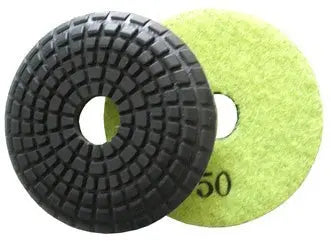
Diamond Polishing Curved Pads, EXPell 3" Convex Domed
Diamond Pad:Curved Backer
Quantity:
Fast Ship: Usually takes 1-2 business days to ship out.
Ships from Oregon (Click for average Ground delivery map )
)
Ships from Oregon (Click for average Ground delivery map
)
Diamond Polishing Curved Pads, EXPell 3" Convex Domed
- The EXPell Polishing Pads were designed for Concrete Polishing, but work great on granite or other stone.
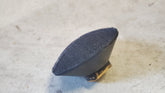
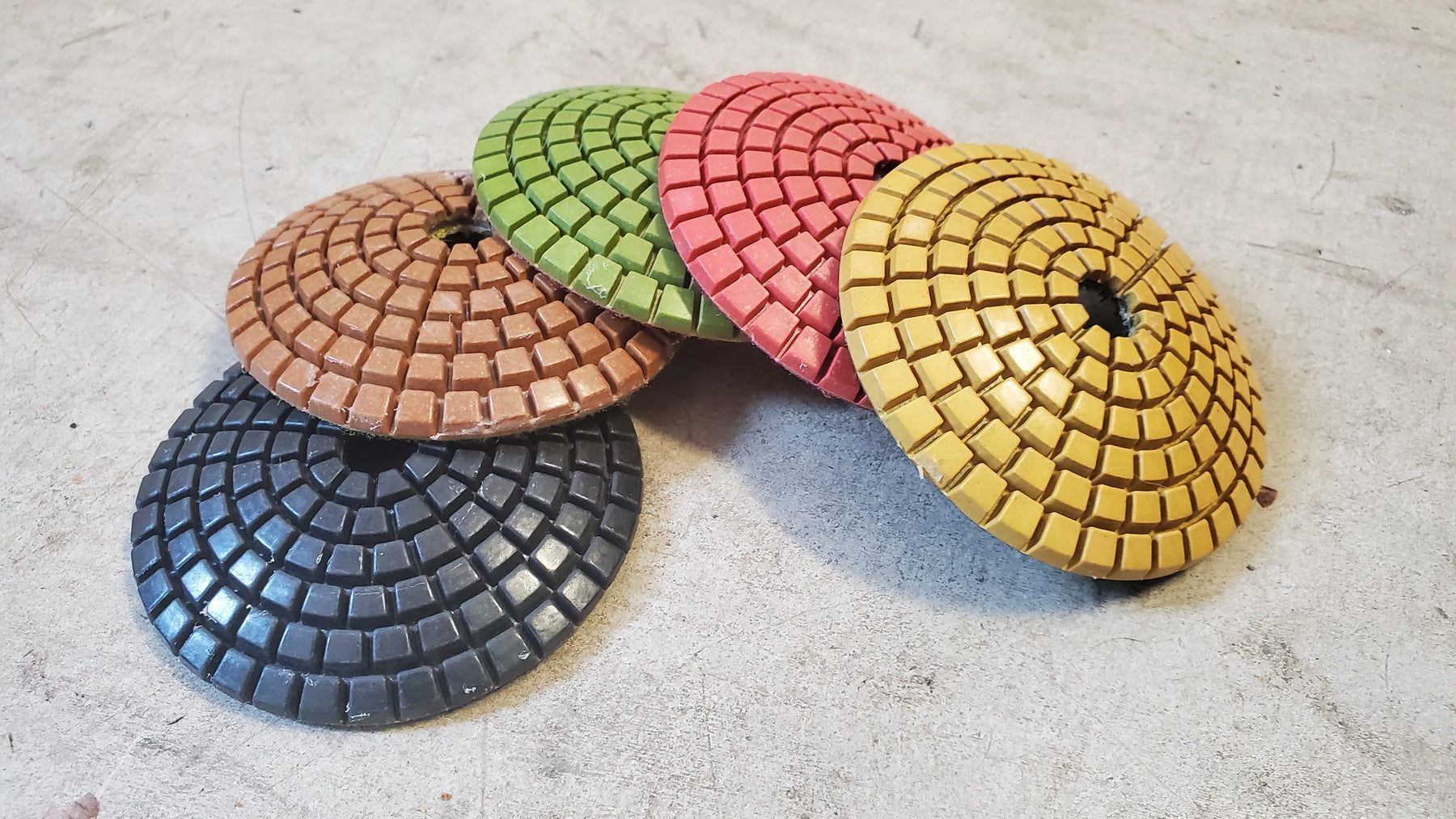
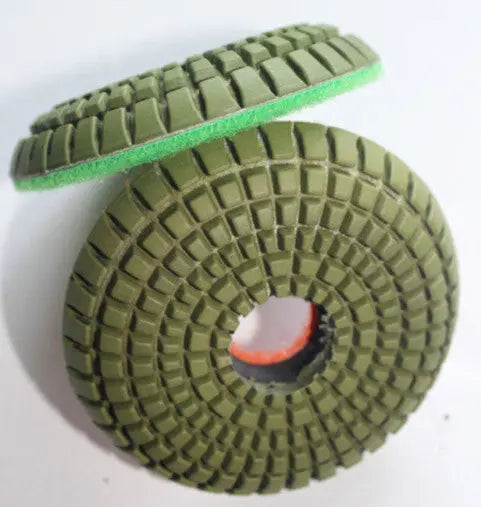
- Convex pads are curved or domed, ideal for polishing curved areas such as concrete sinks. Small 3" diameter for getting in to tight spots.
- Professional grade, premium Wet Polishing Pads.
- PLEASE NOTE: We have 2 styles of these pads- the Flat Back style and the Curved Back style:
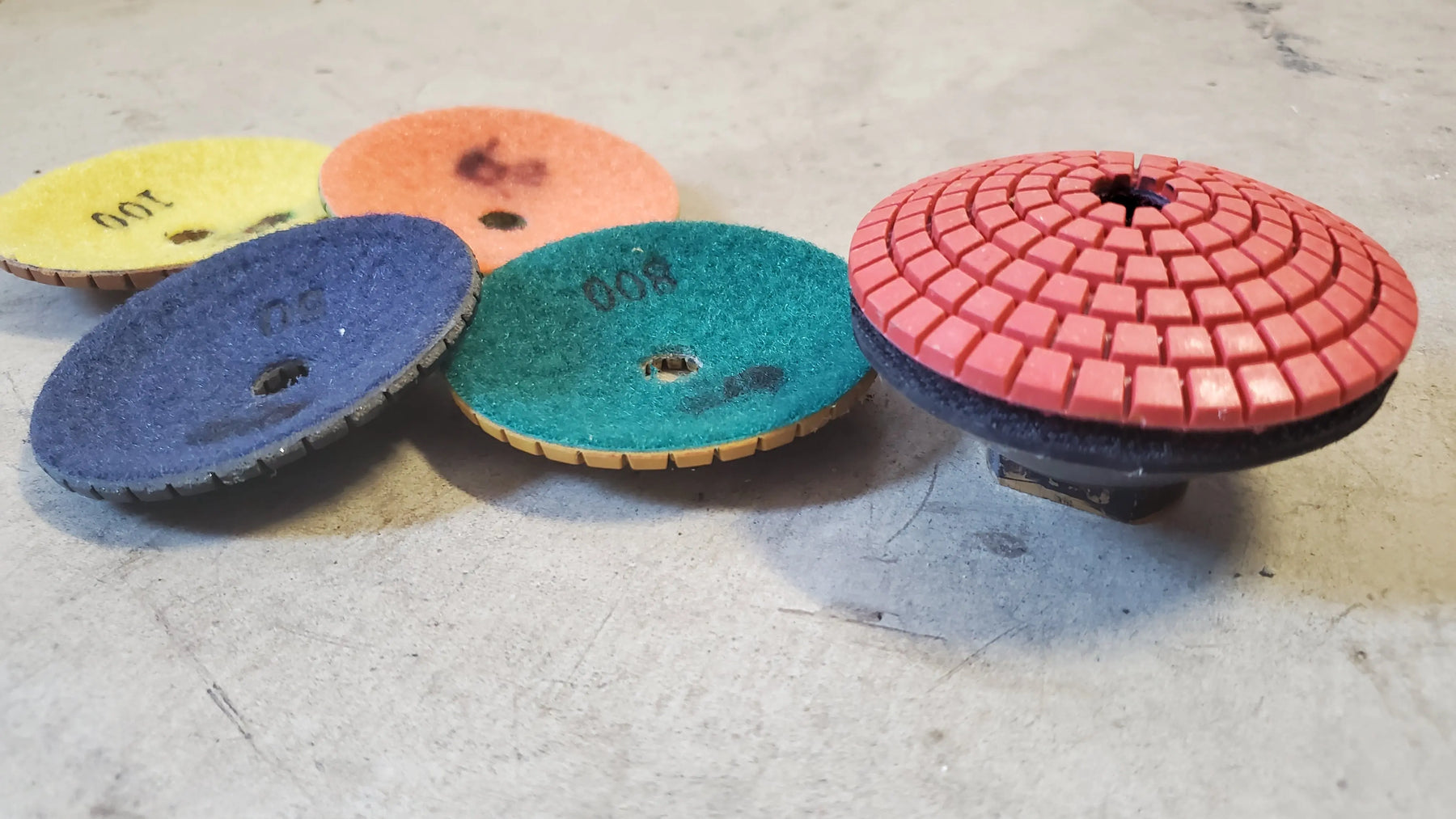
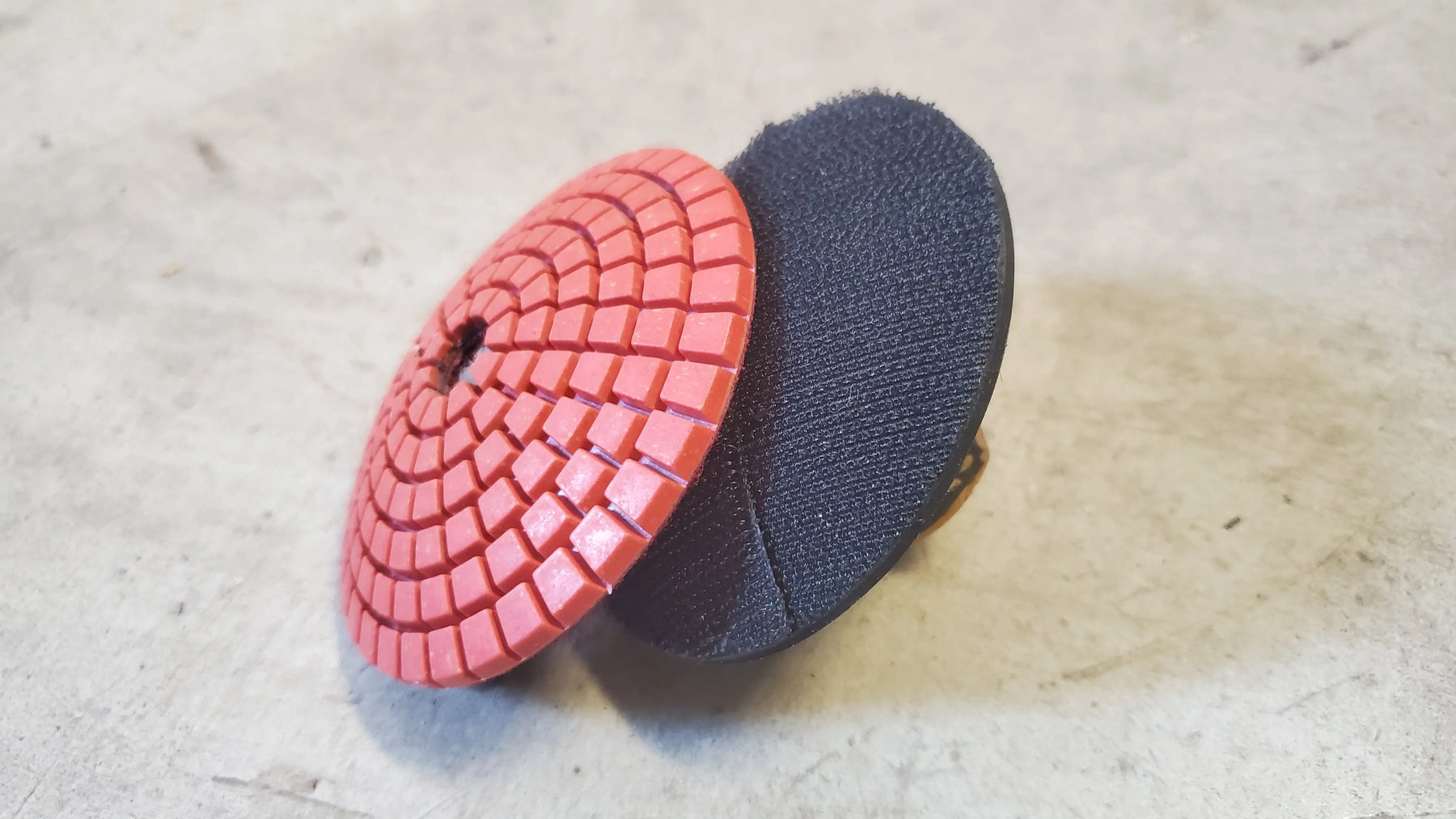
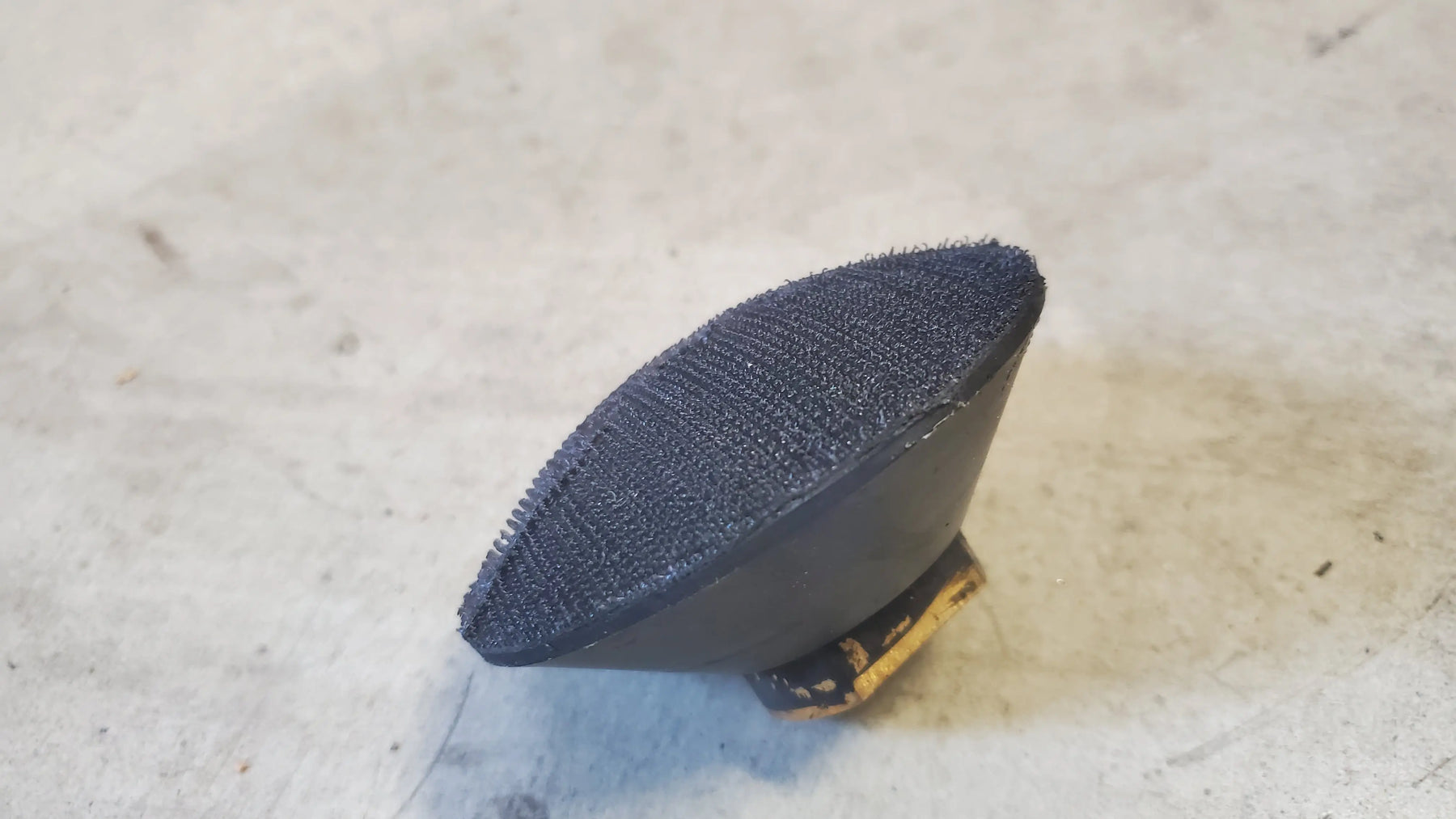
- Curved Back style: The whole pad is dome shaped, and requires the special Curved Backer for them. Make sure to order a Curved Backer with this style or you won't be able to use them!
- Flat Back style: Limited availability- the backs of the pads on the Velcro side are normal/flat and will fit on any flat backer pad. These have a limited round shape- just the edges are beveled.
- Design matrix allows for aggressive polishing.
- Higher diamond content than other polishing pads.
- More aggressive than standard polishing pads, and longer life.
- Designed for WET use only.
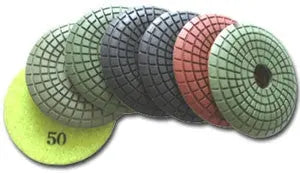
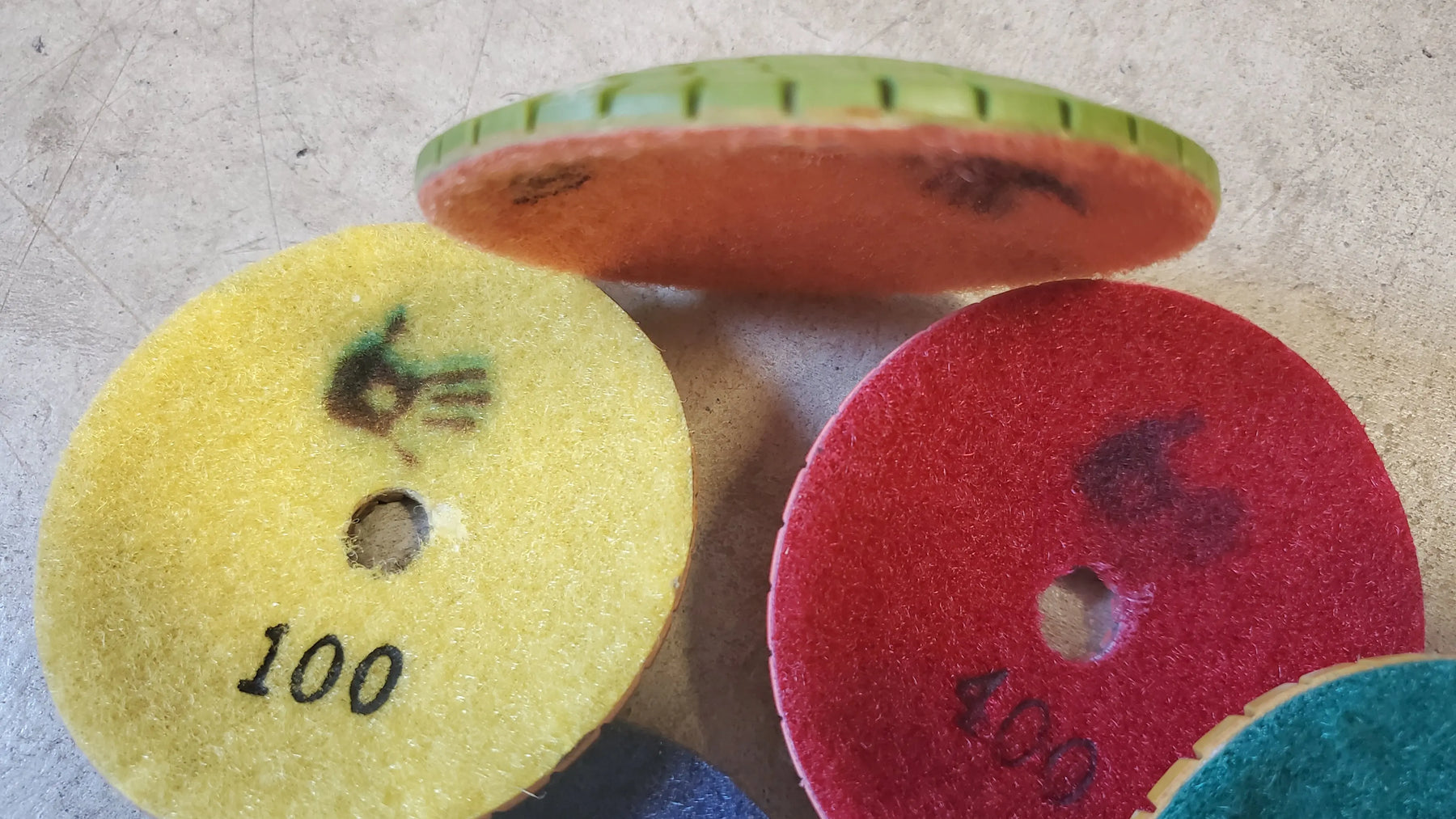
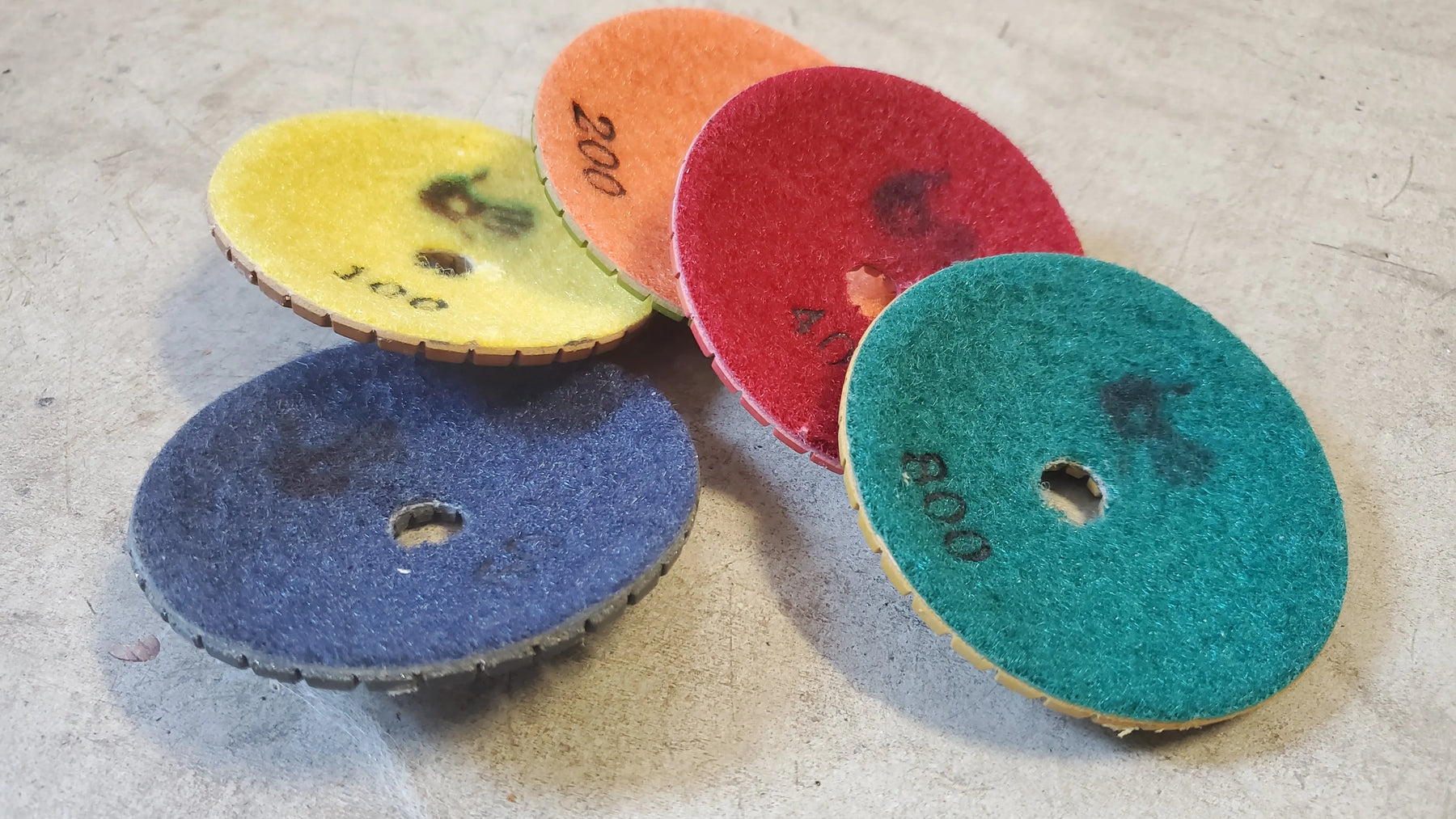
- Grits are color coded on the Velcro backing.
Specifications Diamond Polishing Curved Pads, EXPell 3" Convex Domed
- Measurements: 3" Diameter, 3mm Thickness
- Wet pads should only be used wet. Polishing with a wet pad without water will burn and ruin the pads.
- Optimal RPM: Wet - 4000 RPM maximum.
- DO NOT exceed the recommended RPM for the pad- it will burn through the pad at a faster rate!
Coverage and Use: Diamond Polishing Curved Pads, EXPell 3" Convex Domed
- Coverage rating for Diamond Pads is basically non-existent.
- The reason is because each user will use the pads differently, and each surface will have different hardness ratings, which will effectively change how long the pads will last polishing that surface.
- A Polishing Tool (Polishers sold here) should be used, not a grinder. Polishing with water needs to be done by a tool that is safe to use around water, and most grinders are not water-friendly. Grinders also usually have very high RPMs, which will overheat and ruin a diamond pad. We carry a variety of polishing tools, both electric and pneumatic.
- Allow the polisher to do the work. Forceful excessive pushing down on the polisher and pads will burn through them faster than necessary and create an uneven surface.
- Keeping the pad flat while polishing will prolong it's lifespan. Polishing at any angle will wear the edges of the pad faster than the middle.
- A general benchmark (keep in mind GENERAL means your results could be drastically different) is that when polishing concrete, to polish deep enough to expose some sand and aggregate in the concrete, a 30 Grit pad would be used first to get 'down' to the desired level. One 4" Wet 30 grit pad is usually sufficient to get a small sized kitchen (40-50 sq. ft.) polished down to expose sand and gravel aggregate. Purchasing more of your lowest grit needed is usually a safe way to ensure you get the job done. Wet pads will usually have at LEAST double the life of a Dry pad.
-
When polishing a sink, it is usually harder to get the polishing tool down into the sink and maneuver. A polisher extension will make this process much easier. Polisher Extensions sold here.
- Once the surface is honed to the proper depth, the rest of the pad grits are used to now polish the surface, removing the scratches left by the 30 grit. So, a 50 grit, then 100, 200, and so forth. Each finer grit removes the scratches from the previous coarser grit.
- Please keep in mind that what works for one, may not work for another. Concrete hardness, the hardness of the sands/gravel, etc. will all effect diamond pad life.
- Granite, Marble, or other stone surfaces will polish differently than concrete, and usually are just 'polished' rather than being honed first to get to the proper level of exposed aggregate.
- Diamond Polishing Curved Pads, EXPell 3" Convex Domed Pad